Verified
2
AI-Powered Property Platform
INTRODUCTION
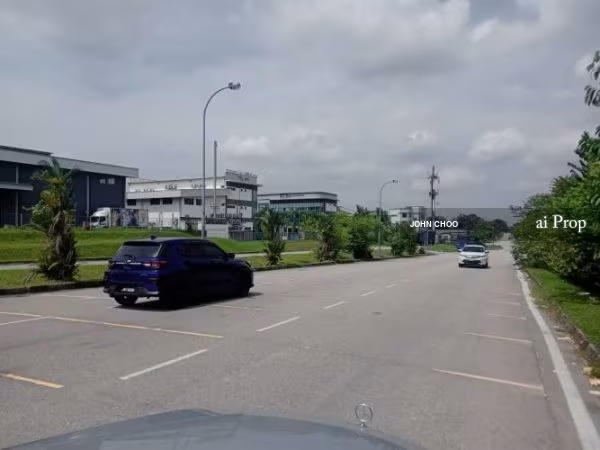
Johor Bahru district is the most mature and tightly supplied industrial land market in Malaysia. The district wraps the state capital from Tampoi and Kempas in the west through the Tebrau corridor and Plentong in the east to the port city of Pasir Gudang, and it concentrates nearly all of Johor's economic plumbing: the Causeway and the new RTS Link to Singapore, both north-south expressway corridors, the airport link at Senai, and the eastern gateway to Johor Port. Industrial land here is scarce, fragmented and mostly held by operators who have run factories on it for decades — parcels that reach the open market are sold on fundamentals, not marketing.
That scarcity is the point. Tampoi and Kempas, the district's oldest belts along Federal Route 1, were developed in the 1970s and 1980s and are now tightly hemmed in by housing; Tebrau Industrial Park and the Taman Johor Jaya belt line the Kota Tinggi Highway (FT3) where the Pasir Gudang Highway feeds traffic east; and Ulu Tiram's newer estates offer the district's only meaningful supply of fresh medium-industrial land. Across all of it, freehold titles are the exception rather than the rule — which is exactly why freehold parcels command a premium. Pasir Gudang anchors the district's eastern flank and carries its own dedicated market on this site.
The district's value proposition has been rewritten by the JS-SEZ. Signed in January 2025, the zone pins a special 5% corporate tax rate on qualifying new investment, and the RTS Link — the 4 km rail shuttle from Bukit Chagar to Woodlands, opening at the end of 2026 with 10,000 passengers per hour in each direction — is converting the city centre into a cross-border workplace. For land buyers, that means the district's existing industrial belts now sit inside Singapore's de facto manufacturing hinterland.
WHY JOHOR BAHRU
KEY LOCATIONS
Johor's first industrial estates, developed from the 1970s along Federal Route 1 between the Skudai Highway and the Kempas Highway (J3). Parcels run from under an acre to about 8 acres, mostly leasehold, at the district's premium price-per-sq-ft thanks to city proximity — best for medium industry, distribution and showroom-style operations serving the urban market.
Factory and land clusters along the Kota Tinggi Highway (FT3) around Tebrau Industrial Park and Taman Johor Jaya, carrying heavy truck flows toward Pasir Gudang and Kota Tinggi. A mix of detached factories and raw medium-industrial land with strong warehousing and E&E assembly demand, 20–25 minutes from the city centre and directly on the route to Desaru and the eastern coast.
The mukim between Johor Bahru and Pasir Gudang, home to long-established light and medium estates around Taman Molek and the Masai boundary. Freehold parcels are more common here than in the city core, and the location suits firms that serve both the JB market and the port without committing to either extreme of the corridor.
Off the JB–Kota Tinggi road, estates such as Taman Perindustrian Puncak Ulu Tiram, Tiram and Tropika offer the district's only meaningful supply of fresh medium-industrial land. Plots are more spacious, contiguous acreage can still be assembled for land-banking, and prices sit well below the Tampoi–Tebrau belts while staying inside the district's labour and logistics net.
BUYER'S CHECKLIST