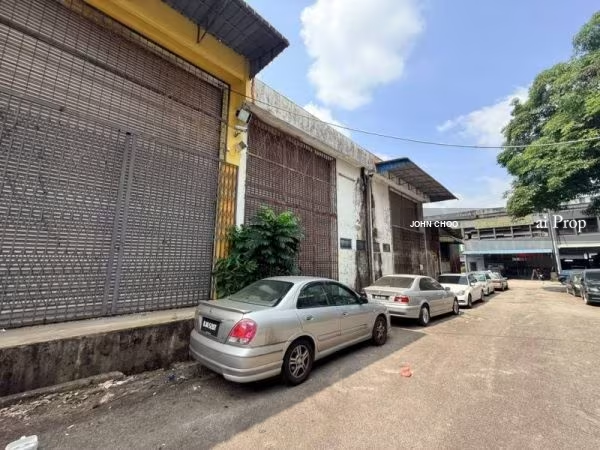
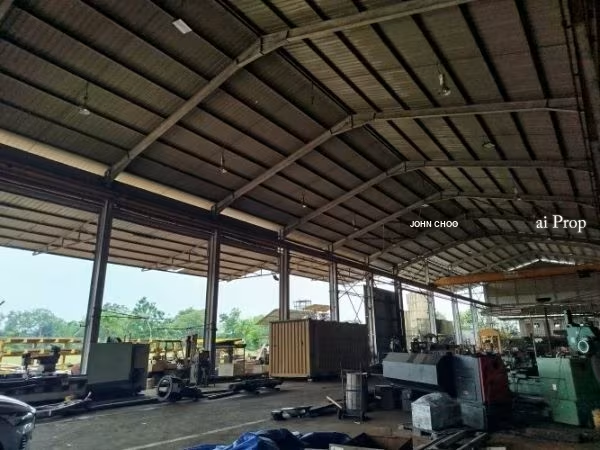
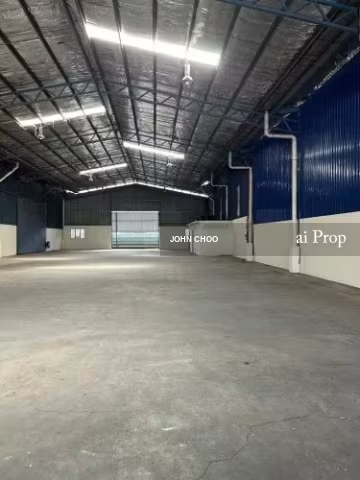
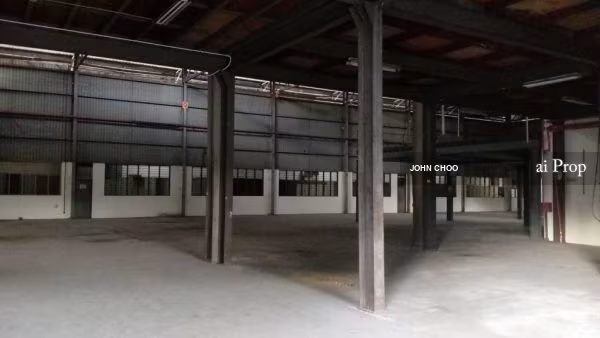
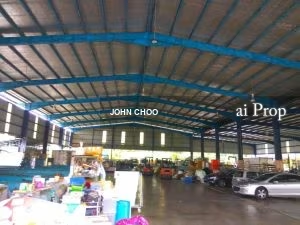
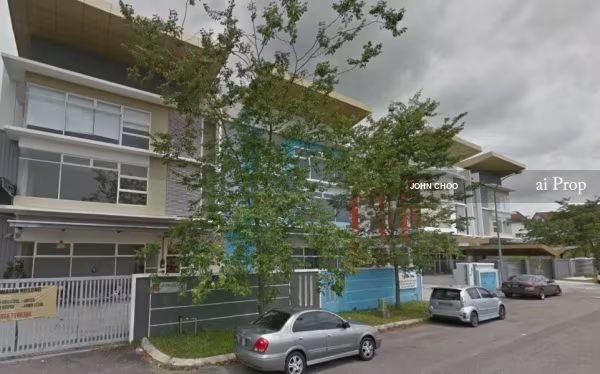
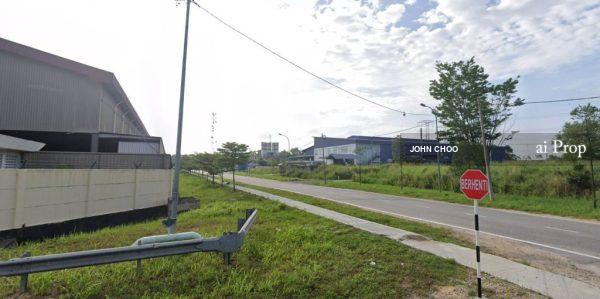
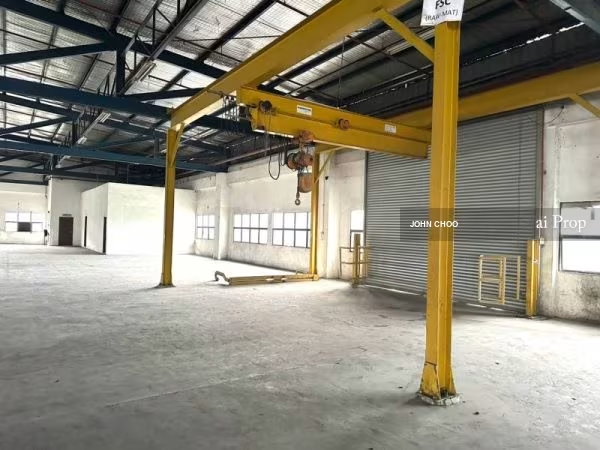
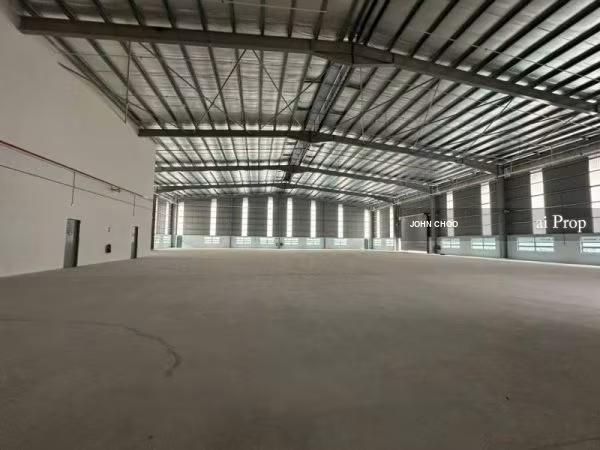
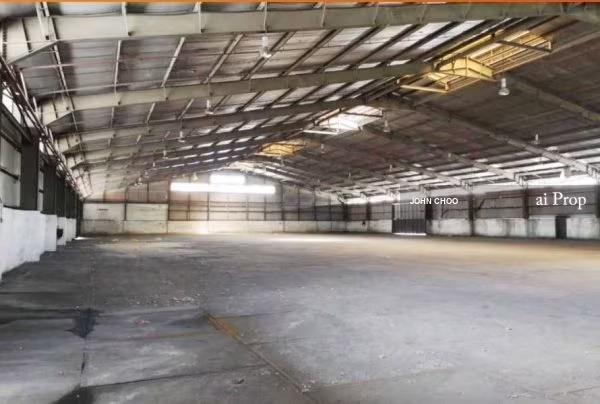
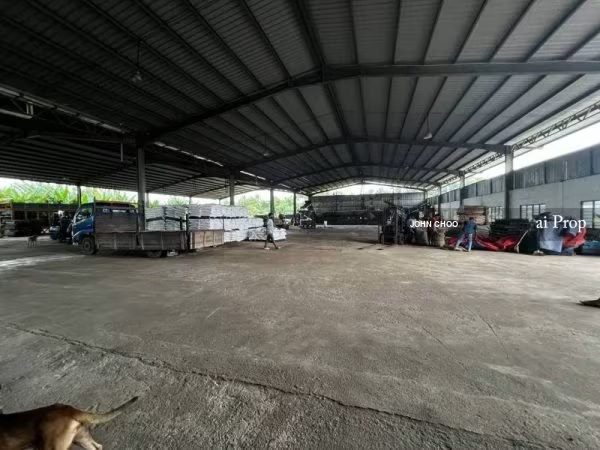
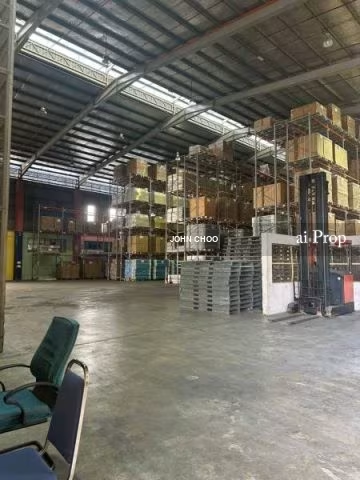
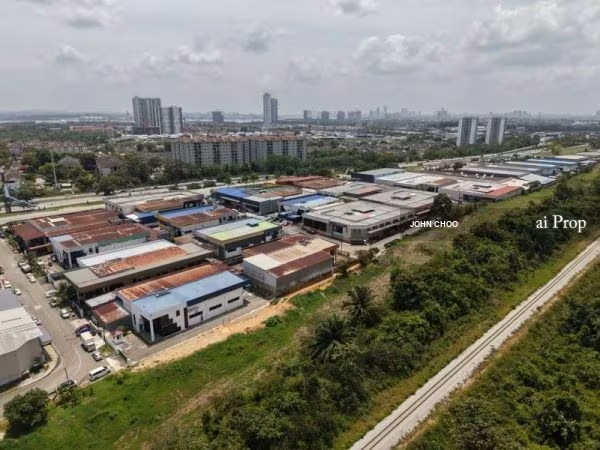
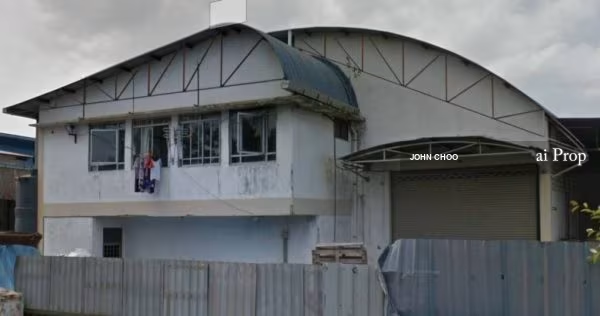
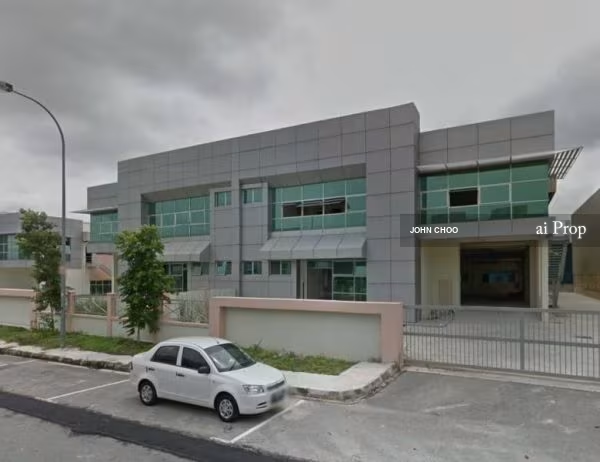
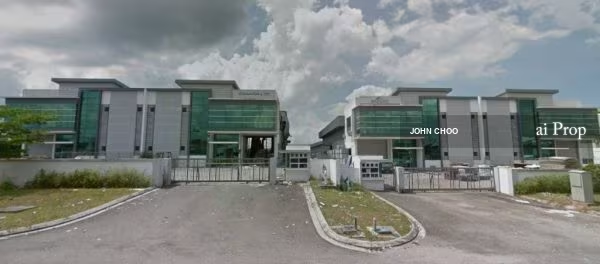
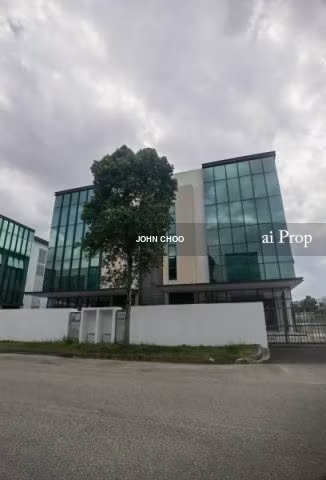
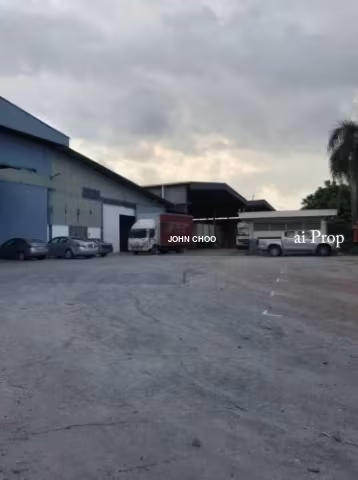
Available Factory Listing
INTRODUCTION
Looking to buy a factory in Malaysia? AiProp lists factory lots for sale across every major industrial corridor — from Johor's JS-SEZ and Senai Airport City belt to Selangor's Shah Alam and Klang Valley hubs, Penang's Bayan Lepas industrial zone, and emerging manufacturing states including Pahang and Melaka. Whether you're an owner-occupier searching for a terraced unit to house your SME, a manufacturer upgrading to a semi-detached or detached facility, or an investor targeting industrial yields, our AI-powered platform connects you with verified listings faster than any traditional property portal.
FACTORY TYPES
Types of Factories for Sale
1.5-Storey Terraced Factory
The most accessible entry point for SMEs purchasing their first factory lot. The ground floor serves as the production or warehouse area; the upper mezzanine houses offices, meeting rooms, and staff amenities.- Built-up: 1,500–5,000 sq ft on lots of 1,400–4,500 sq ft
- Clear ceiling height: 5–7 metres
- Power supply: 60–200 Amps (TNB single or three-phase)
- Suited for: light manufacturing, e-commerce fulfilment, F&B production, printing, SME assembly
- Typical price range: RM 600,000–2,500,000 depending on location and specification
2-Storey Terraced Factory
A full second floor — rather than a mezzanine — gives businesses a proper office, showroom, or additional production deck alongside the ground-floor workspace. Built-up typically ranges from 2,500–8,000 sq ft, making it the most common format in newer industrial parks such as Eco Business Park 2, i-Park Senai Airport City, and Iskandar Puteri industrial zones.Semi-Detached Factory
Two units sharing one common wall, with significantly more road frontage, floor area, and power headroom than a terrace. The right choice for businesses that have outgrown a terrace unit or need dedicated loading bay access.- Built-up: 5,000–20,000 sq ft on land of 8,000–25,000 sq ft
- Clear ceiling height: 8–10 metres
- Power supply: 200–600 Amps
- Wide lorry turning radius possible; loading dock configurations available
- Suited for: medium manufacturing, logistics, 3PL, cold chain, assembly
- Typical price range: RM 2,500,000–12,000,000
Detached Standalone Factory
A standalone facility on its own land parcel — no shared walls, full perimeter control, and maximum flexibility for businesses with specialized infrastructure, heavy machinery, or high power demand.- Built-up: 10,000 sq ft to 100,000+ sq ft
- Clear ceiling height: 10–15 metres
- Power supply: 500 Amps to 5,000+ Amps
- Floor loading capacity: typically 20–50 kN/sq m
- Suited for: heavy manufacturing, large-scale logistics, automotive, chemical processing, data centre ancillary operations
- Typical price range: RM 5,000,000–175,000,000+ depending on size and specification
Cluster Factory
A relatively new format gaining traction in quality-conscious industrial parks — a group of compact, individually titled factory units sharing gated common infrastructure: guardhouse, perimeter fencing, landscaping, and shared amenities.- Clear ceiling height: 10–15+ metres (minimum 10m for modern triple-deep racking)
- Column spacing: 12m+ preferred for wide aisle racking configurations
- Loading: dock levellers, covered loading bays, wide truck aprons
- Suited for: e-commerce operators, 3PL providers, MNC distribution centres, cold chain logistics
WHY BUY A FACTORY
Why Buy a Factory Instead of Renting?
- Build equity, not rent receipts — monthly loan installments build ownership equity; rental payments build nothing. Over a 20–30 year hold, an owner-occupier accumulates a substantial asset while a tenant accumulates zero.
- Capital appreciation — industrial sale prices in established parks have appreciated significantly over 2023–2025, driven by JS-SEZ FDI inflows and land scarcity in mature industrial estates. i-Park @ Senai Airport City freehold units now command RM 89–874 per sq ft, a significant premium over launch pricing.
- Rental yield for investors — Malaysian industrial property consistently delivers 5–9% gross rental yield, outperforming residential yields in the current market.
- Operational certainty — owning your premises eliminates lease renewal risk, rent escalation, landlord redevelopment risk, and the cost and disruption of forced relocation — critical for businesses with specialized fit-out, heavy machinery, or regulatory approvals tied to a specific address.
- Fit-out freedom — owners can modify, extend mezzanines, add loading docks, install solar panels, and upgrade power supply without landlord consent.
- Bankable balance sheet asset — a freehold industrial title can be refinanced to release working capital, used as loan collateral, or sold to realize gains while the business continues operating.
SPECIFICATION GUIDE
Key Factory Specifications — What to Check Before Buying
Power Supply (TNB Amperage)
The single most important operational specification for manufacturing buyers. Confirm the installed TNB supply in Amps and whether single-phase or three-phase. Typical ranges: terraced factory 60–200A; semi-detached 200–600A; detached 500A–5,000A+. Upgrading TNB supply after purchase is possible but expensive and slow (3–24 months). If your process requires 500A and the unit only has 200A, factor in upgrade cost and timeline before committing.Ceiling Height (Clear Height)
Critical for racking, machinery, and logistics operations. Measure clear height at the lowest obstruction (beam, duct, sprinkler head) — not the ridge height. Standard terraced factory: 5–7m. Semi-detached: 8–10m. Detached industrial: 10–15m. Grade A logistics warehouse: 12–15m. Racking heights in modern logistics require minimum 10m clear height for triple-deep systems.Floor Loading Capacity
Measured in kN per sq m. Standard factory floor: 15–20 kN/sq m. Medium industrial: 20–30 kN/sq m. Heavy industrial: 30–50+ kN/sq m. If you operate CNC machinery, heavy presses, or large racking systems, verify the floor loading spec before purchase — reinforcing an existing factory floor is expensive and disruptive.Loading Dock and Lorry Access
Confirm lorry access road width to the factory — Malaysian lorries (12m rigid, 18m articulated) require minimum 9m internal road width for comfortable manoeuvring. Dock levellers, covered loading bays, and truck aprons are key for logistics and distribution operations. Terraced factory units in older estates often have narrow road access that limits vehicle size.Land Use Category
Factory land in Malaysia is classified as Light Industry, Medium Industry, or Heavy Industry. Light Industry permits clean manufacturing, assembly, and warehousing. Medium Industry permits general manufacturing with moderate process risk. Heavy Industry permits chemical, petrochemical, and high-impact manufacturing. Confirm the land use category matches your intended operations — operating a medium industry process on a light industry lot can trigger compliance issues.Title Type
Freehold factory title is permanent and fully bankable. Leasehold titles (typically 60 or 99 years from the grant date) are more common in older industrial estates. For leasehold, verify the unexpired lease term — most Malaysian banks require minimum 30–40 years remaining for financing. Leasehold factories in older estates with under 30 years remaining will be difficult to finance and should only be considered at significant discounts.BUYER'S GUIDE
Buying a Factory in Malaysia — Key Steps
- Define your operational requirements first — list your minimum power supply (Amps), clear ceiling height, floor loading, loading bay configuration, and land use category before searching; operational misfit is the most common and expensive factory buying mistake
- Owner-occupier vs. investment — owner-occupiers should prioritise operational fit and long-term business location stability; investors should prioritise yield, tenant quality, lease term, and liquidity in a market with active industrial buyers
- Verify title and tenure — freehold vs. leasehold, remaining lease term, and any encumbrances on the industrial title; confirm at the Land Registry before signing any SPA
- Check TNB power supply — request the current TNB account and tariff; visit TNB's office to confirm available capacity at the nearest substation if upgrading power is part of your plan
- Inspect structural condition — older factory units may have roof leaks, floor subsidence, or drainage issues not visible on a casual inspection; engage a certified building inspector or quantity surveyor for units over 15 years old
- Industrial park obligations — factories in managed parks are subject to park developer guidelines on permitted uses, architectural modifications, signage, and maintenance; review the park's Development Guidelines before committing
- Free Zone implications — factories within gazetted Free Zones (Senai Airport City FIZ, SiLC FZ, Tanjung Pelepas FZ) require operations to comply with Royal Malaysian Customs Free Zone regulations; non-compliant uses can jeopardise Free Zone status
- Foreign company purchase — foreign-owned companies can purchase factory property in Malaysia subject to state government consent; Johor state government has generally been supportive of foreign industrial investment; engage a solicitor familiar with Johor industrial property transactions
- Engage a REN-registered industrial property agent — industrial property transactions are specialist; use an agent with demonstrable Johor industrial track record, not a residential agent handling industrial as a side transaction
- Compare factory prices by state — factory for sale is generally more affordable per sq ft than comparable Selangor or Penang units, with equivalent or superior infrastructure in new parks; use AiProp's state filter to compare factory sale prices across Malaysia before shortlisting locations
- Use AiProp's AI property search — describe your operational requirements in plain language and let AiProp's AI match you to the right factory for sale in Malaysia from hundreds of active listings; filter by built-up area, plot size, power supply, and title type in one search
FAQ — Factory for Sale in Malaysia
What is the difference between light, medium, and heavy industry factory classification?
Malaysian factory land is classified by industrial intensity. Light Industry (Industri Ringan) permits clean manufacturing, assembly, packaging, food processing, printing, and warehousing — no significant noise, vibration, chemical discharge, or environmental impact. Medium Industry (Industri Sederhana) permits general manufacturing with moderate process risk — metalworking, plastics, automotive parts, electronics assembly. Heavy Industry (Industri Berat) permits chemical, petrochemical, heavy fabrication, and high-environmental-impact manufacturing — concentrated in Pasir Gudang and Kota Tinggi. Most SME factory buyers target light or medium industry lots. Confirm land use category with the relevant local authority (MBJB, MPKu, MBIP) before purchase.
Can a foreign company buy a factory in Malaysia?
Yes. Foreign-incorporated companies can purchase factory property in Malaysia subject to state government consent. Industrial property acquisitions by foreign companies are generally facilitated. The process typically takes 2–4 months. Engage a Johor-based solicitor with industrial property transaction experience to manage the consent application alongside the SPA process.