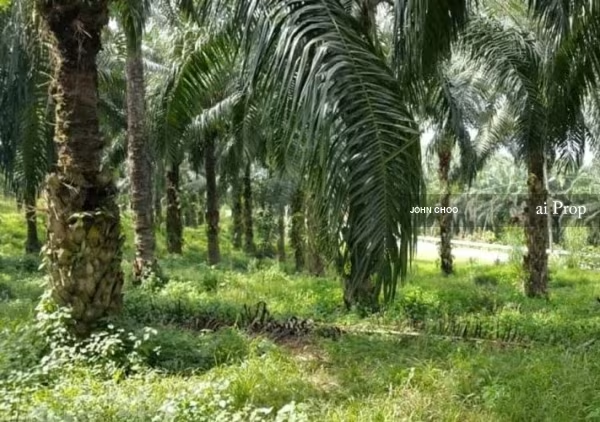
Kuala Pilah is the quiet heart of Negeri Sembilan — an inland district wrapped around the Muar River valley that once served as the state's capital and now serves as its most affordable agricultural land market. For buyers who measure value in per-acre price rather than proximity to a highway exit, Kuala Pilah is hard to beat: freehold palm plantations have been marketed here from around RM120,000 per acre, roughly a third of the values found an hour's drive west in Seremban.
The district's mukims — Johol, Juasseh, Parit Tinggi and Ampang Tinggi — produce a steady stream of palm, rubber and young orchard parcels, with sizes ranging from a few acres of young palms to 500-acre estates. The land is undulating and for the most part well-drained, and it is priced to make palm economics work from the first harvest cycle.
The district's character is a reminder of its history: Kuala Pilah was the capital of Negeri Sembilan before Seremban, and the royal architecture of Seri Menanti still draws visitors along the FR51 heritage loop. For land buyers, that history matters less than the practical picture — two-lane trunk roads, a patient market, and prices that have barely moved in a decade, which is precisely why value investors like it. The trade-off is liquidity: estates here sell to buyers who have done their homework, so expect a slower sale cycle than Seremban or Nilai when the time comes to exit. Patient money, however, is rewarded with some of the lowest per-acre entry costs on the peninsula, and the district's young-crop listings mean you can buy into the growth curve rather than paying for mature-tree goodwill.
Kuala Pilah town sits about 38km east of Seremban on the FR51 road — roughly a 45-minute drive — and about 90km from Kuala Lumpur via Seremban. Bahau, the main town of neighbouring Jempol district, is around 25km east, and the royal town of Seri Menanti, home to the Istana Seri Menanti, lies about 20km to the west on the road through Parit Tinggi.
This market suits patient plantation investors building acreage at the state's lowest entry prices, durian developers looking for hillside ground, and buyers who want freehold tenure without paying the KLIA or Seremban premium. It is less suited to those needing industrial-conversion upside or daily commuting access. Browse available listings above, or read on for a full breakdown of each precinct.
Browse available listings above, or read on for a full breakdown of each precinct.
WHY KUALA PILAH
State-low pricing — freehold palm estates have been marketed from about RM120,000 per acre — a third of Seremban-fringe values and below typical Johor pricing. Sellers here are typically long-term holders or estate heirs, which means deals tend to be done on realistic valuations rather than speculative asks.
Freehold with a wide buyer pool — much of the district's land is freehold and non-Bumiputera, keeping it accessible to all Malaysian buyers without quota complications.
Muar River valley fertility — the river's alluvial flats and well-drained hillsides support palm, rubber and fruit crops on the same title. The valley's soils also support fruit crops such as durian and rambutan where slopes are gentle enough, widening the crop options beyond palm.
Verified large blocks — 500-acre freehold palm plantations come to market here (recently at RM120,000 per acre) — scale that is scarce near the coast.
Royal-corridor tourism — Seri Menanti's royal palace and the FR51 heritage route draw visitors through the district, supporting agro-tourism and farmstay concepts on orchard land.
Young-crop entry points — 2-to-5-year-old palm and fruit parcels are regularly listed in Johol and Juasseh, letting buyers buy into the growth curve cheaply.
KEY LOCATIONS
Kuala Pilah town & Parit Tinggi
The FR51 corridor west of town, where parcels sit closest to Seremban-bound traffic and the district's services. Parit Tinggi is the junction where the road branches north toward Seri Menanti — expect the district's strongest values here. Ongoing FR51 corridor improvements have eased access in recent years, and parcels with direct road frontage here are the first to move.
Johol
South of the town, Johol's mukim is a steady source of young palm and orchard parcels, including freehold non-Bumiputera listings in the 4-to-30-acre range. Quiet country roads, good drainage and the district's friendliest entry prices. Johol's young plantations suit buyers who want to avoid paying for mature-tree goodwill and would rather carry a few years of establishment cost.
Juasseh
East of Kuala Pilah on the road to Bahau, Juasseh holds flatter alluvial land along the Muar tributaries — the best option for buyers who want palm on gentler terrain rather than hillsides. Paddy and mixed-crop plots along the tributaries offer different economics — lower yields, but also lower input costs and gentler terrain.
Seri Menanti corridor
The royal town's approach roads carry a mix of orchard and smallholding land with tourism-facing potential; parcels here suit agro-tourism and farmstay concepts as much as pure agriculture.
BUYER'S CHECKLIST
Malay Reserve status — as in the rest of Negeri Sembilan, some Kuala Pilah parcels are Malay Reserved; confirm eligibility at the land office before negotiating.
Tenure and title — run the geran search for charges, caveats and quit-rent arrears at the district land office; freehold is common but must be verified on the title itself.
Flood and drainage — check flood history along the Muar tributaries — alluvial flats are fertile but need to be dry enough for palm root systems.
Crop age and records — for palm, verify MPOB registration and FFB receipts; for young orchards, confirm the planted variety and maintenance history.
Access width — the FR51 is a two-lane road; confirm the plantation road's width and condition for harvest lorries, especially in wet season.
Haulage economics — factor the drive to the nearest mill or collection point into pricing — distance from processing is the hidden cost of cheap land.