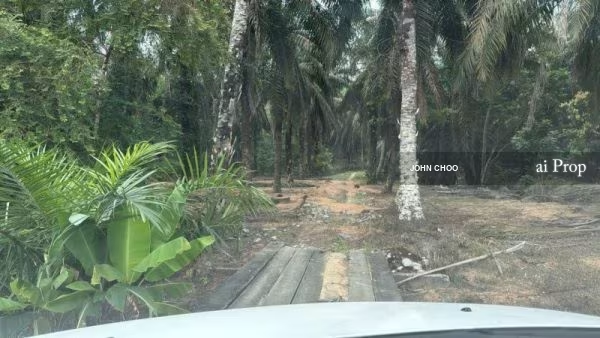
Senai is the engine room of Kulai district, and the town's identity is written in two things: the airport and the oil palm. Senai International Airport, the state's busiest passenger gateway, sits just minutes from Senai town centre and anchors a free-trade zone with its own cargo terminal, while the surrounding mukims of Senai, Saleng and Sedenak are stitched together by mature palm estates, smallholder plots and the occasional durian orchard. The result is one of southern Johor's most accessible agricultural markets: freehold parcels that sit within reach of an international airport, an industrial corridor and the North-South Expressway, yet still trade at plantation pricing rather than industrial pricing.
Most agricultural land in the Senai area is freehold, and asking prices vary widely with location and tree age — from roughly RM150,000 per acre for larger inland estates to RM1 million or more per acre on the airport fringe, where industrial-conversion potential is already priced in. Palm stands aged 8 to 15 years are the sweet spot for buyers who want income while they hold; older blocks of 20-plus years are usually priced for near-term replanting, which is where patient capital finds its discount.
Buyers should also weigh what is happening around the land. The Senai-Desaru Expressway interchange network, the airport's expanding cargo capacity and the data-centre build-out at Sedenak Tech Park have all pulled new capital into Kulai district, and agricultural parcels within 10km of these nodes are the ones seeing the fastest appreciation. At the same time, Malay-reserve and Bumiputera quota lots are relatively few in this corner of Johor, which keeps the eligible buyer pool for freehold parcels wide. Serious buyers typically tour land in the early dry season, when access roads and drainage lines are easiest to judge, and it is worth walking a parcel end to end — a stream crossing or a soft corner can quietly change its usable acreage.
From Senai town, Johor Bahru's city centre is about 20km south via the Skudai Highway, Kulai town centre is roughly 15km to the northeast, and the Senai-Desaru Expressway puts Pasir Gudang's port zone within a 45-minute drive. Senai International Airport is the immediate anchor for air-freight-dependent operators, while Kulai's own industrial estate — home to palm-oil and oleochemical plants such as IOI Pan-Century — gives FFB producers a nearby offtake market for their harvest.
This market suits plantation investors looking for freehold acreage with strong exit optionality, FFB producers supplying Kulai's refineries, and buyers with a medium-term view who want the option of industrial conversion. It is less suited to pure hobby-farm buyers, who will find better value further north in Johor or across the border in Negeri Sembilan.
Browse available listings above, or read on for a full breakdown of each precinct.
WHY SENAI, KULAI
Airport adjacency — Senai International Airport lies roughly 5km from Senai town, and the Senai Airport City free-trade zone beside it adds industrial-conversion upside that inland estates simply do not have. Air-freight users also note that the cargo terminal supports perishables and high-value agri-exports, not just industrial shipments.
Freehold dominance — most agricultural parcels in the district are freehold, letting owners hold through multiple crop cycles and conversion windows without lease-expiry pressure. Leasehold is rare enough here that buyers should treat it as a red flag demanding an unusually deep discount.
Industrial demand spillover — Kulai is one of Johor's fastest-growing industrial districts, and the JS-SEZ flagship Sedenak Tech Park is being built in the same district, lifting values along the whole corridor.
Proven palm economics — mature estates (verified listings of 7 to 26 acres in Mukim Senai) trade on established FFB yields, with Kulai's oleochemical plants — including IOI Pan-Century — providing a stable offtake market.
Infrastructure spine — the Senai-Desaru Expressway, Skudai Highway and North-South Expressway all converge around Senai, so logistics from farm gate to port or airport terminal is short and reliable.
Exit optionality — agricultural-zoned land near the airport has historically attracted conversion interest; Johor's rezoning process runs 6-12 months via the state land committee, with the conversion premium payable on approval.
KEY LOCATIONS
Mukim Senai — the airport fringe
The heart of the market: freehold palm parcels between Senai town and the airport terminal, many within sight of the SAC free zone. Prices here are the district's highest because industrial conversion is a realistic medium-term play, but buyers should budget for the state premium and six to twelve months of processing time. Expect to compete with investors from Singapore and the Klang Valley who are buying on the conversion thesis — the same parcels also attract FFB operators who simply want the yield.
Saleng & Bandar Indahpura corridor
South of Senai, the Saleng-Indahpura axis is where township growth meets plantation land. Saleng's light-industrial estates and Bandar Indahpura's new residential neighbourhoods have pushed fringe parcels into transition territory, making this a hunting ground for shorter-hold investors who want the growth story without airport prices. Portals currently show freehold agricultural parcels from 7 to 26 acres in this belt, giving buyers a genuine range of entry sizes to work with.
Sedenak
West of Kulai town along the Kulai-Ayer Hitam trunk road, Sedenak remains palm country — FELDA-era estates and smallholder plots at the lowest per-acre prices in the district. The gazetted Sedenak Tech Park lies nearby, and the data-centre build-out there is already lifting values on adjoining agricultural land. The FELDA-era estates here are managed, producing blocks rather than abandoned rubber — a quiet, cash-flowing entry point for first-time plantation buyers.
Kelapa Sawit & the FR1 belt
The Kulai-Ayer Hitam road (FR1) threads through Kelapa Sawit and a string of estate villages where 10-to-100-acre freehold parcels are the norm. Values are gentler here, but access is still trunk-road standard — a rare combination this close to the southern Johor market.
BUYER'S CHECKLIST
Tenure and title — confirm freehold or leasehold on the geran and run a search for charges, caveats or Bumiputera restrictions at the Kulai land office before paying any deposit.
Zoning and conversion path — agricultural zoning is not automatic industrial land; Johor's tukaran syarat nyata process runs 6-12 months and the conversion premium is payable within 30 days of approval.
Tree age and FFB economics — palms older than 20 years are approaching replanting; ask for MPOB records and recent FFB sales receipts so you value the crop, not just the dirt.
Access and topography — check the plantation road's width and condition to the nearest JKR road, plus slope and flood history — waterlogged parcels need subsoil drainage before planting.
Utilities and water — confirm Ranhill SAJ water supply or borehole viability, and three-phase power availability if you plan on-site processing or future industrial use.
Foreign-buyer rules — non-citizens generally cannot buy agricultural land outright in Johor; foreign investors must target pre-converted industrial parcels, which carry a RM1 million minimum.