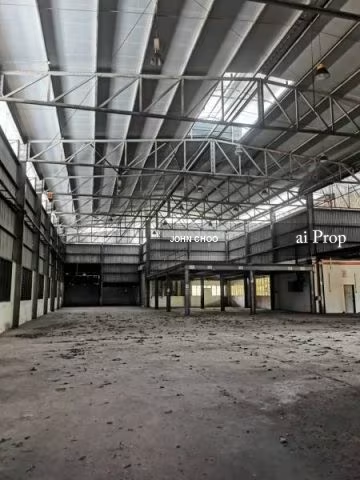
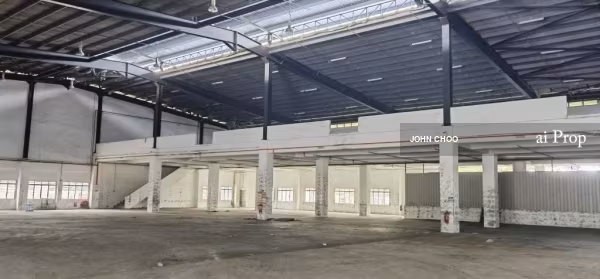
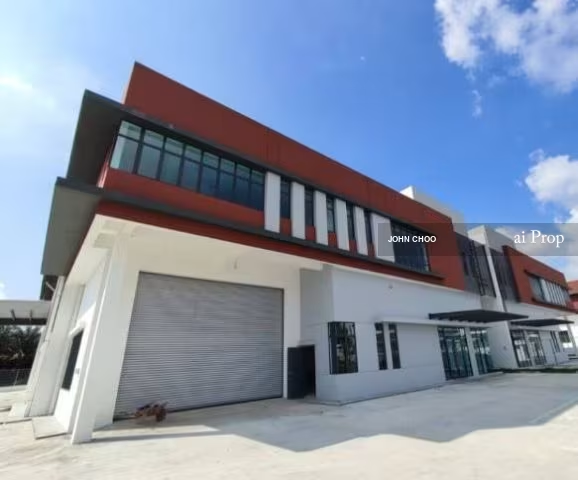
The JB factory rental market is the fastest-moving segment of Johor's industrial property market right now, and the reasons are structural. The RTS Link is due to open passenger service in early 2027 (targeted January, Bukit Chagar to Woodlands North in five minutes), the Johor-Singapore Special Economic Zone is offering qualifying manufacturers a 5% corporate tax rate for up to 15 years, and Singapore firms are setting up twin facilities across the causeway at a pace the market has not seen in decades. Renting is how most of them enter.
The rental pool spans everything from 5,000 sq ft semi-D factories in Tebrau's SME estates to 200,000 sq ft logistics buildings in Desa Cemerlang (recently marketed at about RM1.20 per sq ft per month) and heavy-industrial units in Tampoi and Kempas. For occupiers, renting means no conversion costs, no capex on buildings, and the flexibility to ride the JS-SEZ cycle instead of betting a decade of capital on it.
For tenants, the current market carries a rare combination: record demand and deep supply at the same time. That means competitive rents on new signings, but also landlords who are increasingly willing to negotiate — longer rent-free fit-out periods, stepped escalations and tenant-improvement allowances are all on the table for creditworthy occupiers. The flip side is that the best units (high ceilings, good power, clean titles with current CF) move within weeks, so shortlisting needs to happen fast. A practical note: ask about the building's tenancy history, because a unit that has housed food or chemical operations may carry compliance expectations that a new occupier must inherit.
The JB rental belt runs from Tampoi and Kempas (about 5-10km from the CIQ) through Tebrau and Desa Cemerlang (roughly 15-20km out on the Tebrau Highway) to Plentong and Pasir Gudang (20-25km east on the Pasir Gudang Highway). Senai International Airport is about 30km from the city core.
This market suits manufacturers testing the JS-SEZ opportunity before committing to ownership, logistics and 3PL operators chasing cross-border volumes, and SMEs that want city-zone access without RM5-30 million of capital locked in a building. Browse available listings above, or read on for a full breakdown of each precinct.
Browse available listings above, or read on for a full breakdown of each precinct.
WHY JB
RTS-era demand — with the RTS Link targeted for January 2027, cross-border occupiers are locking in space now, and landlords are offering longer terms to hold them.
JS-SEZ flexibility — renting lets companies enter the 5%-tax zone's manufacturing opportunities without committing to land and building capex first.
No conversion burden — tenants skip zoning, conversion premiums and building capex entirely — the landlord carries the property risk.
Deep stock — the JB belt holds thousands of rentable units from 5,000 sq ft semi-Ds to 200,000 sq ft warehouses, so lead times from enquiry to occupation are short. The depth also means tenants can simply walk away from overpriced units, which keeps landlords honest at renewal time.
Scale on demand — expansion is a lease negotiation, not a construction project; twin-facility operators can size up in 60-90 days. For fast-growing occupiers, the Tebrau corridor offers adjoining units that can be leased progressively as operations expand.
Location pricing — city-zone rents still sit well below Singapore industrial rents — exactly the arbitrage that is driving cross-border demand.
KEY LOCATIONS
Tampoi & Kempas
The city-zone rental core, 5-10km from the crossing. Detached and semi-D units with heavy power and the shortest customer-facing commute into Singapore; rents here are the belt's highest, but demand is structural. Both estates hold anchor tenants from the electronics and packaging sectors, so the surrounding contractor base is well developed. For occupiers that need to meet Singapore customers regularly, this is the most practical address in the state — the crossing is a short drive away, and the RTS station will make the commute shorter still.
Tebrau Industrial & Desa Cemerlang
The SME rental heartland — Tebrau Industrial Estate and adjacent Taman Desa Cemerlang together hold the largest pool of rentable factory units in Johor, from semi-D SME units to 200,000 sq ft logistics sheds, at the belt's sharpest per-sq-ft rates. Because supply is so deep here, tenants can realistically ask for six weeks of rent-free fit-out on a three-year term.
Plentong
Along the Pasir Gudang Highway between Tebrau and the port, Plentong mixes warehousing and light manufacturing with direct port access — a logistics favourite for 3PLs serving both the port and the city. Plentong's location also suits e-commerce operators who split volume between the port and city last-mile routes.
Pasir Gudang & Tanjung Langsat
The heavy-industry and port zone at the belt's eastern end, where chemical, marine and bulk operators rent deep-water-adjacent facilities with the state's highest power availability. Rents in the port zone are land-price-led — expect higher per-sq-ft rates for marine and chemical-compliant buildings.
BUYER'S CHECKLIST
Lease terms — confirm the term, renewal options and escalation; three-year terms with two-plus-two options are the JB norm for factories.
Power adequacy — check the TNB three-phase supply against your machinery load before signing — upgrading a rented building is rarely practical.
Ceiling height and loading — verify clear height, floor load, bay configuration and whether 40ft lorries can turn on site — the three specs that make or break warehouse use.
Costs beyond rent — clarify who bears quit rent, assessment, maintenance and security charges, and the deposit structure (typically two to three months).
Licensing and approvals — confirm your business licence and any DOE consent for Prescribed Activities under the EQA 1974 can be secured for the premises.
Condition and reinstatement — document the building's condition with photos at handover and read the reinstatement clause so you are not billed for pre-existing wear.